



Arm Unveils Mali G2-Ultra NX GPU With AI-Native Graphics for Android
Arm has introduced a new mobile GPU platform built around neural rendering and AI-assisted graphics, a move aimed at narrowing the visual gap between phones and desktop or console gaming. Early reporting ties the chip to Xiaomi's XRing O3, though that partnership has not been confirmed as finalized.
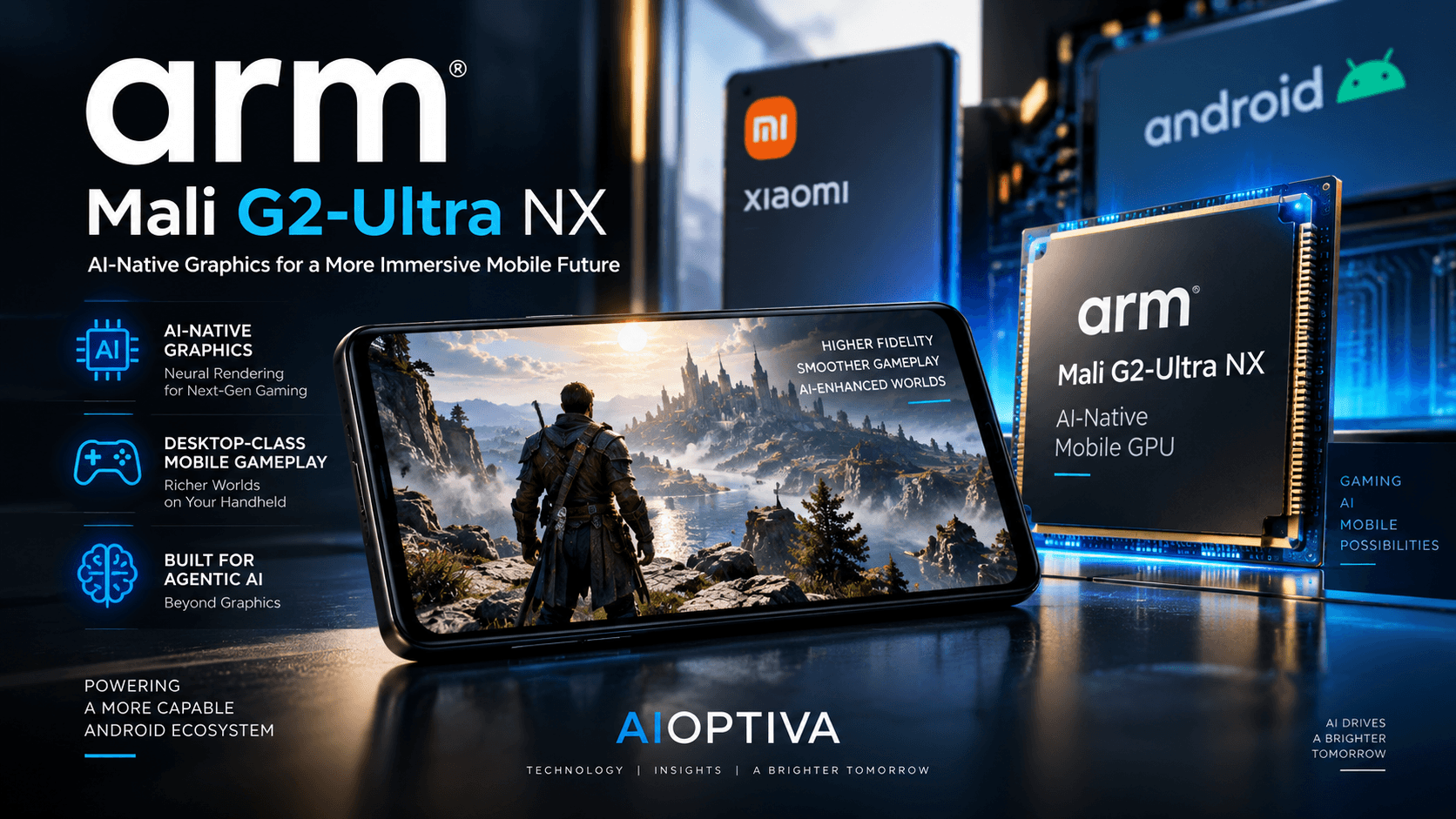
Arm has announced the Mali G2-Ultra NX, a new mobile GPU platform built around AI-native graphics and neural rendering, positioning it as a major step toward more sophisticated mobile gaming experiences.
The announcement has also drawn attention because of what neural rendering could mean for Android gaming.
According to The Verge, Arm's approach resembles technologies such as Nvidia's DLSS, which uses AI-assisted techniques to improve rendered output without relying solely on traditional graphics processing. The Verge also linked the technology to Xiaomi's XRing O3 chip.
The significance goes beyond another incremental mobile GPU upgrade. Neural rendering could change how developers balance image quality and conventional rendering workloads on smartphones, potentially allowing mobile games to produce increasingly sophisticated graphics without rendering every element using traditional techniques.
How closely real-world results will approach desktop or console gaming, however, will depend on implementation, game support, and the performance of shipping devices.
AI-native graphics move closer to mobile
Arm is positioning the Mali G2-Ultra NX around a broader shift toward AI-assisted graphics.
Instead of treating AI workloads and graphics as entirely separate capabilities, neural rendering can use machine-learning techniques as part of the graphics pipeline. Similar approaches have already become increasingly important in PC gaming, where AI-assisted upscaling and frame-generation technologies can complement conventional GPU rendering.
Bringing comparable techniques deeper into the mobile ecosystem could give smartphone manufacturers and game developers another way to improve visual quality as mobile hardware becomes more capable.
Coverage of Arm's announcement also points to broader agentic AI capabilities as part of the company's next-generation mobile platform strategy, suggesting that the architecture is intended to address AI workloads beyond graphics alone.
Xiaomi could be an early adopter
Xiaomi has emerged in early reporting as a potential adopter of Arm's new graphics technology.
The Verge connected the Mali G2-Ultra NX with Xiaomi's XRing O3 chip, although the available reporting does not establish a finalized commercial launch or confirm which device will be first to use the new GPU.
That distinction matters. Early platform announcements often arrive well before manufacturers disclose specific products, configurations, and launch schedules.
What happens next
The key test for the Mali G2-Ultra NX will come when the technology reaches commercial smartphones, and developers can demonstrate how neural rendering performs in real games.
Performance, power consumption, developer adoption and game support will ultimately determine whether AI-native graphics produce a meaningful leap in mobile gaming rather than simply another generation of higher specifications.
For now, Arm's announcement points toward a broader industry direction: AI is becoming part of the graphics pipeline itself, and techniques already reshaping PC graphics are increasingly moving into mobile computing.
Reporting Sources
- First Xiaomi, then the world: why Arm might give phone gaming a huge graphics boostThe VergeReporting
- Inside the Arm Mali G2-Ultra NX GPU: Delivering desktop-class mobile gameplay with AI-native graphicsArm NewsroomAdditional Reporting
- ARM unveils AI-native mobile platform for agentic AI and graphicsPocket Gamer.bizAdditional Reporting
- Arm pushes agentic AI and desktop-quality graphics in next-gen phone platformtheregister.comAdditional Reporting
Related Stories

Apple Reportedly Refreshes Mac Mini and Mac Studio With AI-Ready Chips
Apple has reportedly refreshed the Mac Mini and Mac Studio with new chips designed for AI workloads, according to CNBC and WIRED. While the upgrades point to a stronger focus on on-device AI, exact chip configurations, pricing, and availability remain unclear.

GoPro Sold for $285 Million, Will Pivot Toward AI Infrastructure and Defense
GoPro is set to be acquired in a $285 million deal while remaining publicly traded, as its new ownership outlines plans to expand the action-camera brand into AI infrastructure, defense, government, robotics and aerospace.