



Meta Launches Muse AI Agent as Reports Raise Questions About Access to Email and Health Data
Meta has introduced Muse, a personal AI agent designed to help with everyday tasks. Reports that it may connect with sensitive services, including email, calendars, payments, and health data, are putting privacy and consumer trust at the center of the launch.
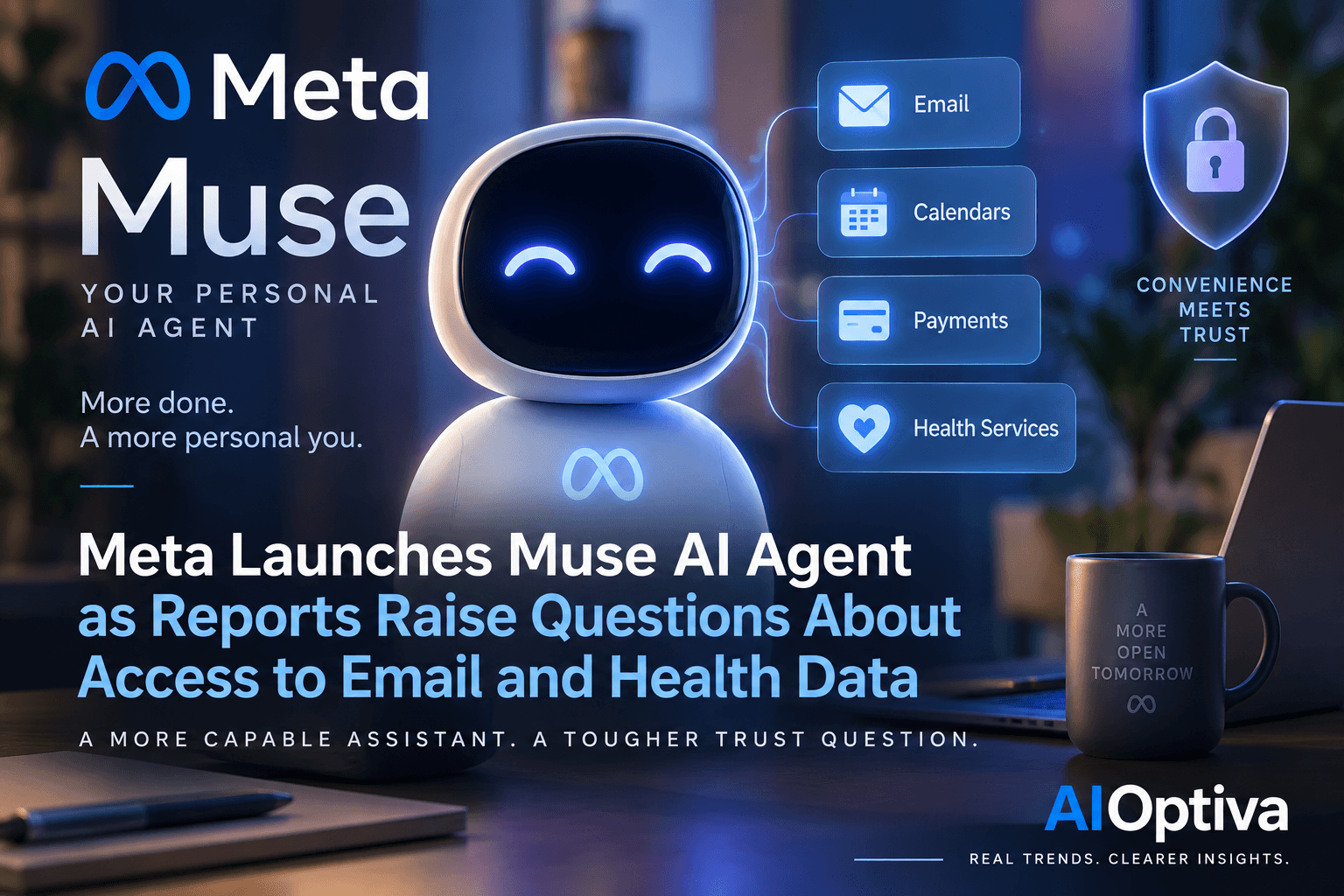
Meta has introduced Muse, a personal AI agent designed to help users manage everyday tasks across digital services.
The Wall Street Journal reports that Meta has positioned the new assistant around ease of use. But much of the early attention surrounding Muse is focused on something else: how much access users may be asked to give it.
What Muse Could Access
TechCrunch reports that Muse seeks access to services including users' email, calendars, payments and health information.
That potential level of access makes privacy an important part of the product's story. Email and calendars can contain extensive personal information, while payment and health services can involve particularly sensitive data.
TechCrunch has consequently framed Muse's launch as a test of whether consumers are willing to trust Meta with the access needed for a more capable personal AI assistant.
Why Trust Matters for Muse
The Verge reports that Muse is part of Meta's broader effort to strengthen its position in the AI race, following significant investment in the company's AI strategy.
WIRED has similarly focused on the trust question surrounding Muse, highlighting the challenge Meta faces in persuading users to give a personal AI agent access to important parts of their digital lives.
Together, the coverage suggests that Muse will be judged on more than its AI capabilities. Its adoption may also depend on whether users believe the convenience it offers is worth granting access to sensitive services and information.
That makes Muse an interesting test for the next generation of AI agents. As assistants become capable of doing more on a user's behalf, questions about permissions, privacy and control become increasingly important.
What Remains Unclear
Important details about Muse's permissions and data handling remain unclear from the available reporting.
TechCrunch reports that Muse seeks access to email, calendars, payments and health services, but the available Meta material reviewed for this article does not independently establish the precise scope of those permissions.
It also remains unclear from the available sources how individual permissions are presented to users, what controls users have over connected services, how long relevant data may be retained, and what specific opt-out options are available.
Those details will matter as Muse reaches consumers. The appeal of a personal AI agent is its ability to understand context and take useful actions across services, but that capability can require users to grant considerably more access than they might give a conventional chatbot.
For Meta, Muse therefore represents more than another AI product launch. It is also a test of whether consumers are ready to give increasingly capable AI agents deeper access to their digital lives — and whether Meta can earn the trust required for them to do so.
Reporting Sources
- Muse: Meta's personal AI agent, features & capabilitiesai.meta.comPrimary Source
- Meta debuts its Muse AI agent. Will consumers trust it?TechCrunchReporting
- Muse, Meta’s New Personal AI Agent, Needs You to Trust ItWIREDReporting
- Meta Launches a Personal AI Agent Designed to Be Easy to UseWSJReporting
- Meta bets on AI agent Muse to catch up in AI raceThe VergeReporting
Related Stories

Mistral AI's Valuation Climbs Past $24 Billion in New Funding Round
Reuters and The Wall Street Journal report that French AI developer Mistral AI has crossed a $24 billion valuation, with Samsung said to be behind the new round — though other outlets citing a euro figure and additional backers haven't been reconciled with that number.

EU Designates ChatGPT a 'Very Large' Service Under the Digital Services Act
ChatGPT is set to face tougher oversight in the European Union after being designated a Very Large Online Search Engine under the Digital Services Act, bringing additional responsibilities around systemic risks and online safety.

Crusoe Reportedly Valued at $30 Billion After Raising Over $3 Billion
Crusoe has reportedly raised more than $3 billion in new funding at a $30 billion valuation, according to Bloomberg News reporting cited by Reuters.